For decades, brand governance was built around a relatively simple assumption:
If you control what you publish, you can control how your brand is represented.
Brands built systems around that assumption. Brand guidelines defined what could be said. Approval workflows determined what could be published. CMS, DAM and product information systems helped organizations manage the assets and information reaching customers.
- The website was controlled.
- The product page was controlled.
- The campaign was controlled.
AI answer engines have changed that boundary. Today, someone can ask an AI system about your products, positioning, policies or competitors and receive an answer your organization never wrote, reviewed or approved.
AI isn't simply repeating what your brand says. It is interpreting it.
The new interpretation layer
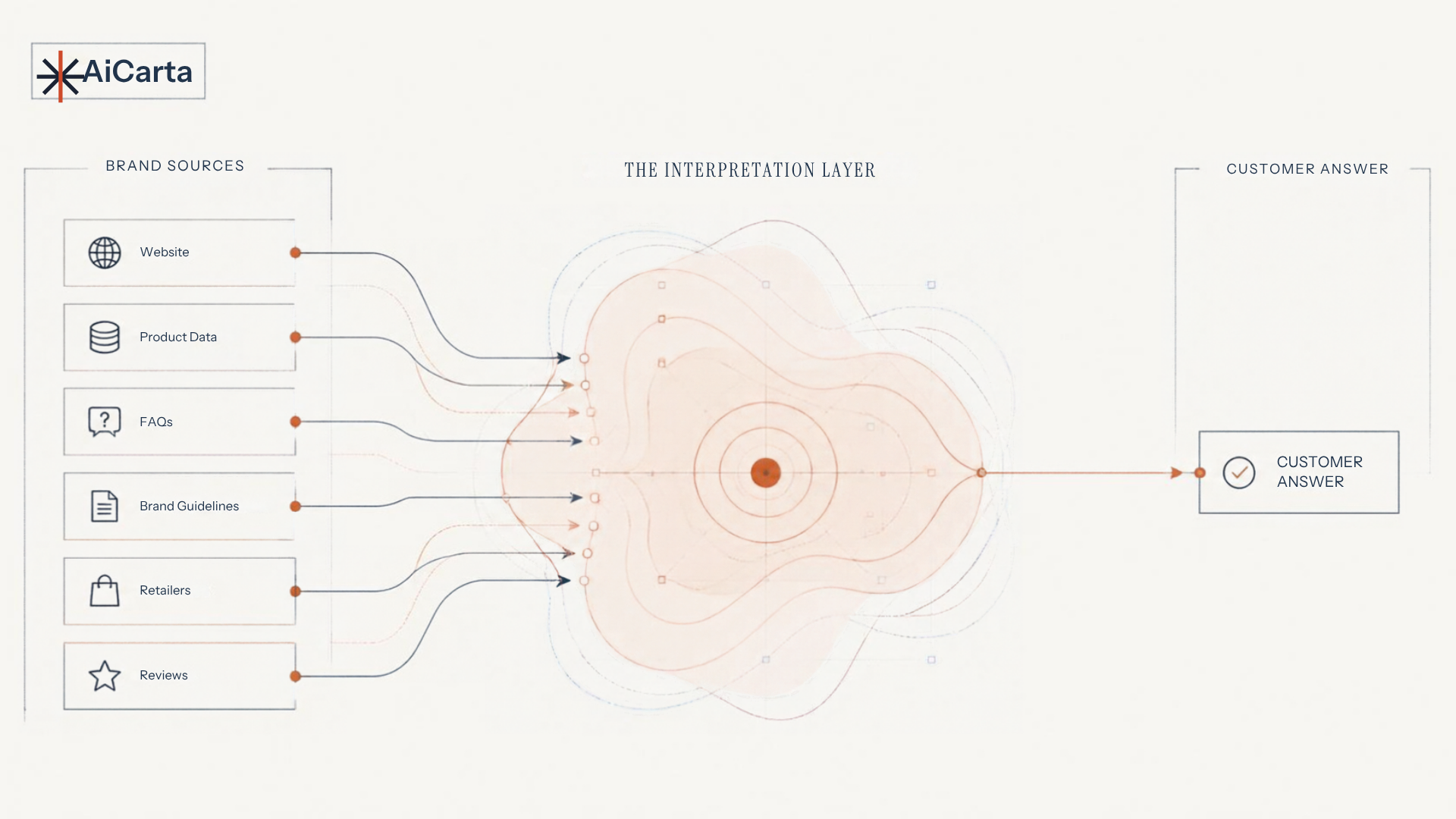
An AI-generated answer can be constructed from many different signals surrounding a brand:
Your website, product information, FAQs, retailer pages, reviews, support content, third-party sources.
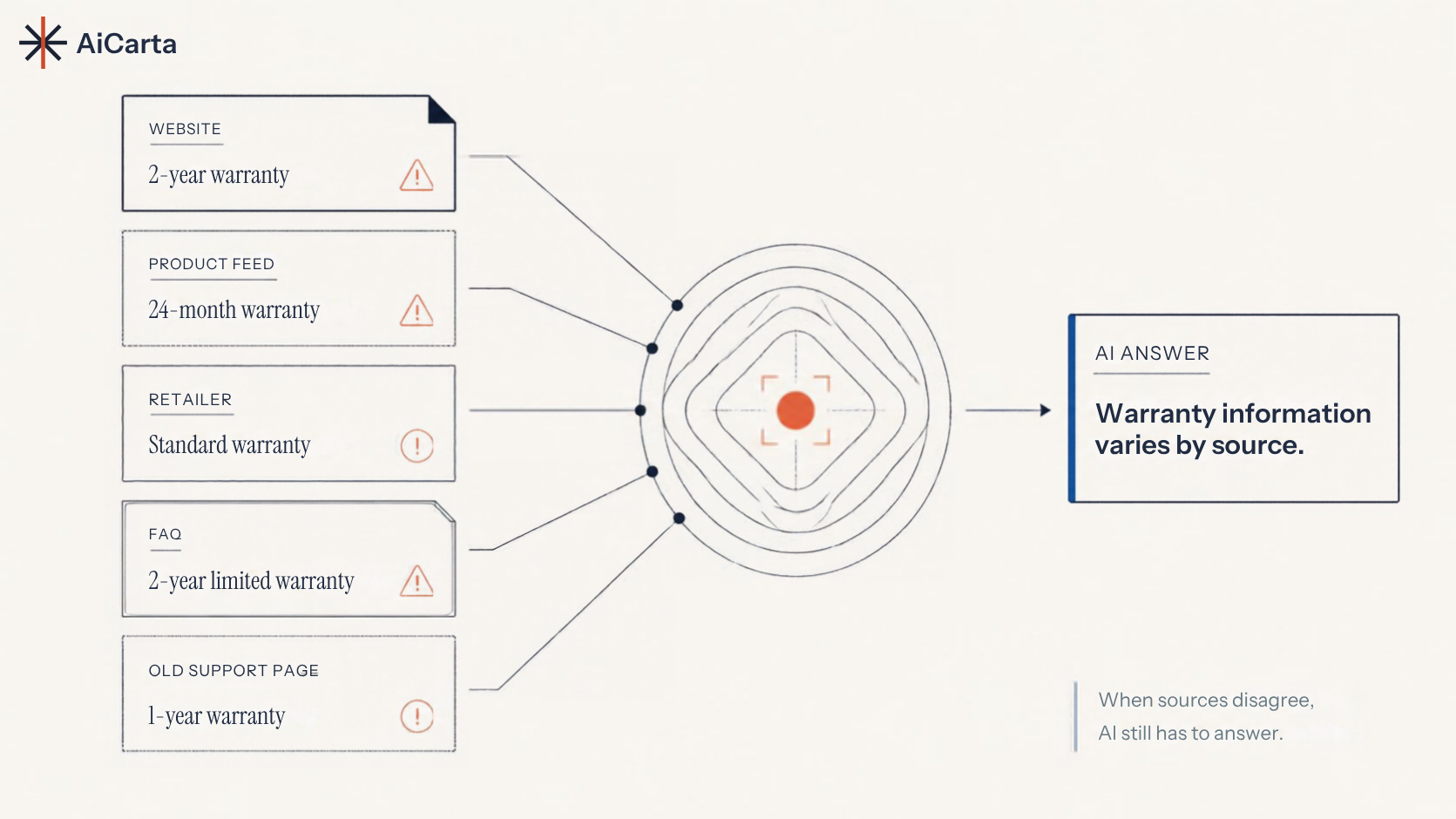
Individually, each source may contain useful information. Together, they may contain different versions of the truth. A product feed may contain the latest specification while an older page contains outdated information. A retailer may describe a feature differently from the brand website. An FAQ may reflect a policy that has since changed.
That creates a fundamentally different question for brands:
Which version of your brand will AI believe?
Brand governance can no longer stop at publishing
Traditional brand governance focused heavily on what an organization could control:
- What can we publish?
- Which claims are approved?
- Which assets are current?
- Does this content follow our brand guidelines?
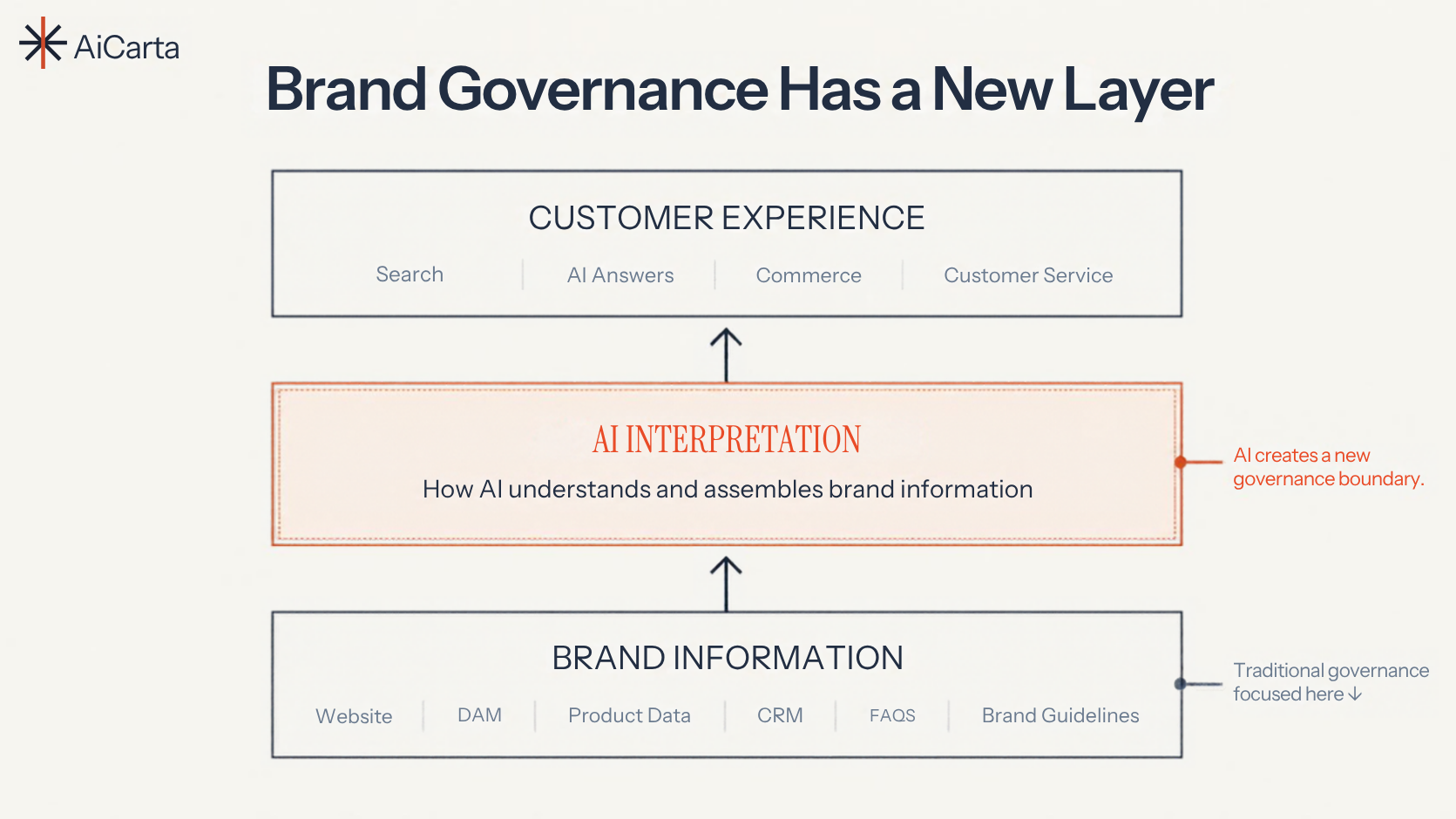
Those controls still matter. But AI introduces another layer between brand information and the customer: interpretation.
A company may govern every piece of content it publishes and still have limited understanding of how those pieces are being assembled into an AI-generated answer. Brand governance therefore needs to extend beyond the publishing layer. It needs to include the context from which AI systems understand the brand.
Visibility tells you what happened. Governance asks why.
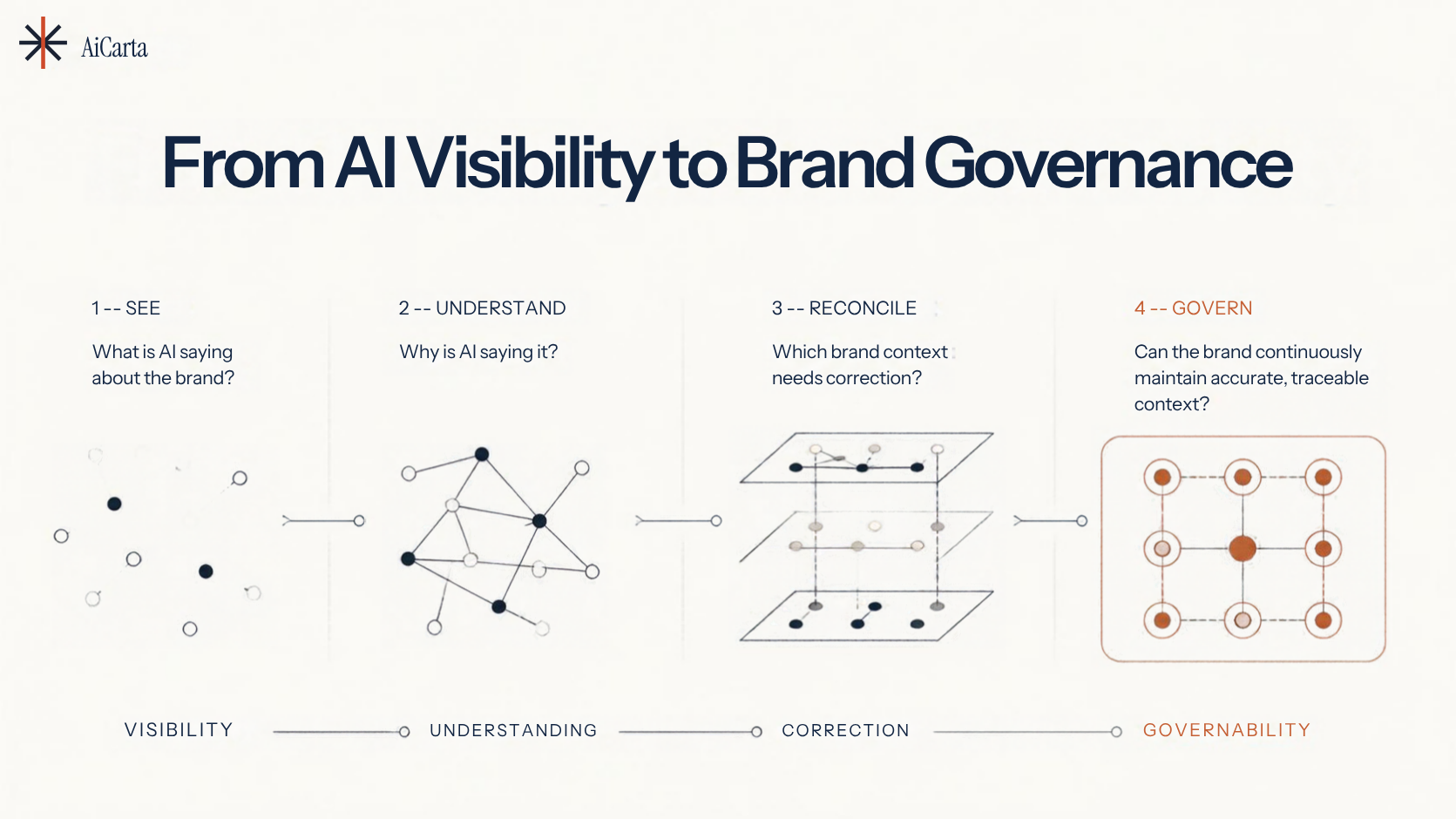
Knowing that your brand appears in an AI answer is useful. But visibility alone doesn't answer the harder questions:
- Why did AI produce that answer?
- Which sources contributed to it?
- Where are conflicting versions of the same information?
- Which parts of the brand context are missing or ambiguous?
- What needs to change?
This is the difference between observing AI representation and beginning to govern it.
The problem isn't a lack of information
Most enterprises already have enormous amounts of brand knowledge. The challenge is where that knowledge lives. Across websites, product feeds, DAMs, CRMs, commerce platforms, brand guidelines, support content, retailer ecosystems and other systems, organizations have accumulated years of valuable information.
AI doesn't see the organizational structure behind those systems. It encounters the information they expose. When those sources disagree, AI is left to reconcile them itself. This is why the emerging challenge isn't simply creating more content. It is creating reconciled brand context.
A context that establishes what is current, what is authoritative and how different pieces of brand knowledge relate to one another.
From brand visibility to brand governability
AI visibility is an important starting point. Brands need to understand how they appear across AI answer engines. But the next question is more consequential:
Can you explain — and influence — why AI represents your brand that way?
That requires connecting monitoring back to the underlying brand context: identifying inconsistencies, tracing their sources and correcting the information AI relies upon.
The goal isn't to control every sentence an AI system generates. It is to make the brand itself more understandable, consistent and governable across the information environment AI uses.
Because as AI becomes another interface between brands and customers, brand equity increasingly depends on more than what a company publishes.
It also depends on what AI can understand from it.
We spent years governing what brands publish.
The next challenge is governing the context from which AI interprets them.